7 Sky Drone Show Tips for Global Buyers?
Buying a Sky Drone Show is not simply choosing colorful aircraft and attractive music. Global buyers must evaluate safety, creativity, technology, and local delivery conditions together. A polished video can hide weak planning. Details matter.
This guide introduces seven practical tips for selecting a reliable drone show partner. It covers flight permissions, airspace coordination, weather limits, and emergency procedures. Ask vendors for recent flight records, risk assessments, insurance evidence, and clear technical specifications. Independent safety credentials can also support a more confident decision. However, certificates alone do not guarantee a smooth performance.
Look closely at the fleet. Battery capacity, positioning accuracy, brightness, noise levels, and formation control affect the audience experience. Request a realistic simulation, not only a dramatic highlight reel. Confirm whether the provider can adapt designs to your venue, culture, language, and event purpose. A strong supplier should explain limitations without avoiding difficult questions.
International projects add practical challenges. Shipping schedules, customs planning, replacement units, local crew support, and communication time zones can influence the final cost. Written contracts should define responsibilities, cancellation terms, rehearsal access, and performance standards. Some buyers focus too heavily on price. That can become expensive later.
No planning process is perfect. Weather may change. Venue data may be incomplete. A careful buyer leaves room for testing and revision. These seven tips will help you compare suppliers with greater confidence, reduce avoidable risks, and build a Sky Drone Show that is memorable, responsible, and technically credible.
Define Fleet Scale: 100+ Drones and Synchronized Formations
7 Sky Drone Show Tips for Global Buyers?
Define Fleet Scale: 100+ Drones and Synchronized Formations
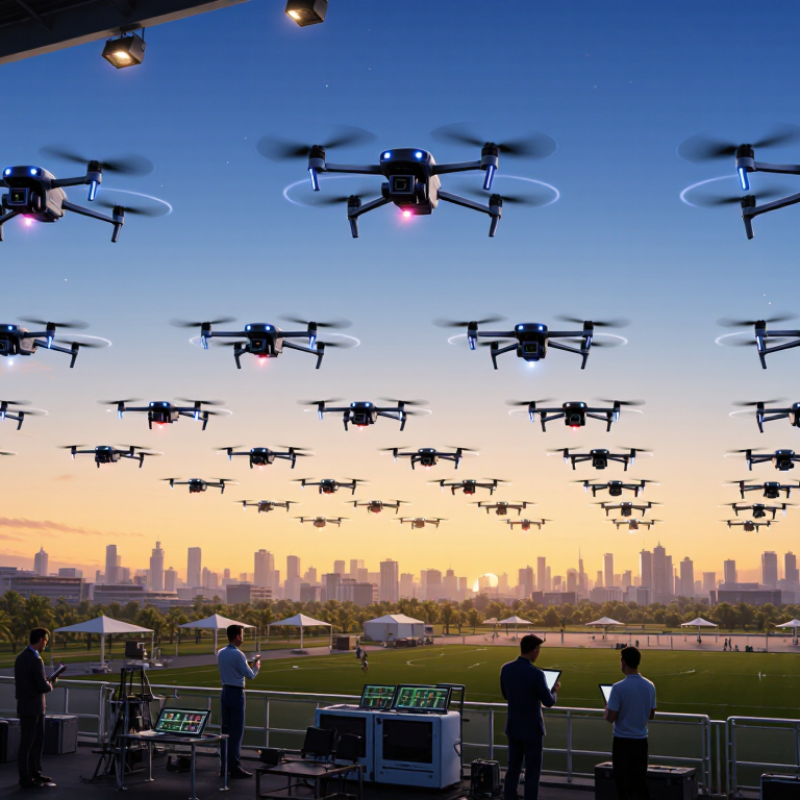
A 100-drone fleet is a practical starting point for large formations. It can create waves, logos, numbers, and moving constellations. However, fleet size alone does not guarantee a strong show. Flight computers, positioning accuracy, battery rotation, and trained operators control the final result. Drone Industry Insights valued the global commercial drone market at about US$30.6 billion in 2023. Its 2024 market report also projects continued growth through 2030. Buyers should therefore evaluate long-term support, not only the aircraft count.
Tip: Request a live synchronization demonstration.
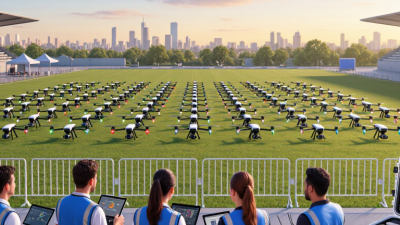
A professional supplier should show 100 or more aircraft flying together. Ask for formation spacing, emergency behavior, and recovery procedures. A 100-drone show may require spare units, charging stations, transport cases, and weather limits. The International Civil Aviation Organization emphasizes risk management and operational competence in its aviation safety guidance. This matters when flights occur near audiences, buildings, or temporary event structures. Confirm local approvals, pilot qualifications, geofencing controls, and insurance requirements before contracting.
Tip: Buy the operating system, not just drones.
Check whether the control platform supports precise timing, automatic aborts, and independent fault handling. Test radio performance at the actual venue, if possible. RF interference can disrupt a perfect rehearsal. I would not assume more drones always create more impact. Sometimes, 120 poorly spaced lights look weaker than 100 disciplined points. Leave room for spare aircraft and honest testing. Small gaps in formation can expose weak planning.
7 Sky Drone Show Tips for Global Buyers — Define Fleet Scale: 100+ Drones and Synchronized Formations
Practical planning benchmarks for evaluating large-scale synchronized drone-show systems
| Tip |
Planning Dimension |
Realistic Benchmark |
What Global Buyers Should Verify |
| 1 |
Define fleet scale |
100+ aircraft for a large synchronized formation; common planning tiers are 100–299, 300–999, and 1,000+ drones. |
Confirm the number of show-ready drones, spare units, charging capacity, and whether the stated fleet size refers to owned inventory or maximum software capacity. |
| 2 |
Evaluate formation density |
Use approximately 3–8 metres of horizontal separation between aircraft as an initial design range; final spacing depends on aircraft size, flight authority, wind, and risk assessment. |
Request a formation simulator, minimum separation settings, collision-avoidance logic, and examples of dense 3D formations rather than only 2D graphics. |
| 3 |
Set show duration and battery reserve |
Plan most programmed sequences within roughly 8–15 minutes, with a conservative reserve and battery replacement time between flights. |
Check tested flight time under the intended payload, temperature, wind, and lighting conditions; require battery health monitoring and documented reserve procedures. |
| 4 |
Measure positioning and timing accuracy |
Professional systems generally require centimetre-to-metre-level positioning capability and tightly synchronized flight timing; the actual accuracy varies by navigation method and environment. |
Ask for measured position error, time-synchronization performance, operation in GNSS-challenged areas, and the fallback behavior after signal degradation. |
| 5 |
Plan the launch and recovery site |
Reserve a controlled ground area with clear access, weather protection, battery handling space, and a practical separation from spectators; the required footprint increases with fleet size and local procedures. |
Obtain a scaled site map showing launch grids, operator positions, emergency landing areas, public exclusion zones, charging stations, and vehicle access routes. |
| 6 |
Validate regulatory readiness |
Approval requirements differ by country and may include aircraft registration, operator authorization, risk assessment, airspace coordination, night-operation permission, and crowd-safety controls. |
Identify the responsible operator, approval timeline, insurance requirements, remote-identification obligations, and the legal basis for flights over or near people. |
| 7 |
Test resilience and emergency response |
A deployment should include pre-flight diagnostics, geofencing, lost-link behavior, controlled abort logic, weather limits, spare units, and a documented recovery plan. |
Request test records for single-drone faults, communication loss, GNSS interruption, low battery, wind exceedance, and controlled termination of the full formation. |
Planning note: The figures above are procurement and design benchmarks, not universal legal limits. Final fleet size, spacing, altitude, operating area, weather limits, and spectator separation must be confirmed through the applicable aviation authority, site risk assessment, and approved operating procedures.
Map Airspace Rules: FAA 400 ft and EASA 120 m Operating Limits
For global drone-show buyers, airspace mapping starts with the legal ceiling. In the United States, FAA Part 107 generally limits operations to 400 feet above ground level. In Europe, EASA’s open-category framework sets a 120-metre limit from the closest surface point. These figures are not interchangeable. Terrain, buildings, temporary restrictions, and local approvals can change the operating plan.
Height is not decoration. A reliable show file should include launch coordinates, audience boundaries, terrain elevation, and emergency landing zones. The FAA’s 2024 Aerospace Forecast reported approximately 865,000 registered drones in the United States during 2023, showing why regulators increasingly emphasize traceability and risk control.
For buyers, this means asking suppliers for current registration, pilot competency, insurance, and authorization records. A spectacular animation is not enough.
EASA’s Annual Safety Review 2024 also reinforces a practical lesson: unmanned-aircraft operations need structured risk management, not informal assumptions. Use geofencing, remote identification where required, and conservative altitude buffers. Do not plan directly at 400 feet or 120 metres. GPS drift, wind, and measurement errors deserve space. Our planning can still be imperfect; a venue map may contain outdated obstacles, and national rules may differ. That weakness should trigger a fresh site survey, not a rushed launch.
Verify Safety Systems: ASTM F3411 Remote ID and Fail-Safe Design
For global drone show buyers, safety verification should begin before the aircraft reaches the venue.
ASTM F3411 provides a framework for Remote ID performance, but it is not a universal operating permit. Ask for current conformity evidence, technical documentation, and test records. Confirm that each aircraft broadcasts identification, position, altitude, and control-station information as required by the applicable configuration.
Do not guess.
Local aviation authorities may apply additional rules.
A practical acceptance test should cover seven details.
Check the Remote ID module, antenna placement, firmware status, and signal range. Test the broadcast outdoors with independent monitoring equipment. Then examine fail-safe behavior during lost communication, low battery, positioning errors, and unexpected landing zones. The aircraft should enter a predictable state, not simply stop responding.
Keep people away from the recovery area.
Test it cold. Repeat tests after transport, because vibration and loose connectors can create quiet failures.
Request time-stamped logs, maintenance records, battery-cycle data, and operator training evidence.
A supplier may demonstrate a perfect flight, yet skip a weak-signal scenario. That gap matters. I would also inspect how the system handles delayed commands and inaccurate positioning near buildings. No checklist is complete. Weather, venue lighting, radio congestion, and human decisions can still change the outcome.
Buyers should record every result and require corrective actions before approving a show.
Safety claims become more reliable when they are measurable, repeatable, and reviewed by qualified personnel.
Check Hardware Ratings: IEC 60529 IP54 and Certified Wind Limits
7 Sky Drone Show Tips for Global Buyers
Check Hardware Ratings: IEC 60529 IP54 and Certified Wind Limits
When I inspect show drones, the IP rating is one of my first checks. IEC 60529 IP54 means limited dust protection and resistance to water splashes. It does not mean waterproof operation. A light drizzle may be manageable, but heavy rain can damage motors, sensors, and battery contacts. Ask for the complete test report, not only an IP54 label. Confirm whether the test covered the assembled aircraft, exposed ports, and battery compartment.
Wind limits require equal attention. A reliable supplier should state the maximum sustained wind and permitted gust speed. These figures should match the tested payload, flight mode, altitude, and temperature. At an outdoor site, wind near the ground can differ sharply from wind above nearby buildings. I would place an anemometer near the launch area and record readings throughout setup. Small details matter. A gust can turn a safe-looking evening into a canceled performance.
Do not treat certification as a promise for every location. Test conditions can be cleaner than real venues, and operators may read limits too casually. I have seen schedules become unrealistic because rain protection was assumed to cover strong weather. Buyers should request maintenance records, inspection intervals, and clear rejection criteria before shipment. It is also wise to run a controlled weather rehearsal, even when the forecast appears calm. Forecasts change. Human judgment still needs disciplined limits.
7 Sky Drone Show Tips for Global Buyers: Check IP54 Hardware Ratings and Certified Wind Limits
How to Read the Reference
The chart shows the upper wind-speed boundary for each Beaufort force in km/h.
It is a meteorological reference, not a flight-approval limit. Always compare the
aircraft’s certified operating wind limit with the forecast wind, gusts, and site conditions.
An IP54 enclosure is dust-protected against harmful dust ingress and protected
against splashing water from any direction. The IP code does not certify wind resistance,
flight stability, rainproof operation, or safe performance during a drone show.
Audit Total Cost: 300–500 Battery Cycles, Warranty, and Support Terms
7 Sky Drone Show Tips for Global Buyers
Audit the total cost before approving a sky drone fleet. The purchase invoice shows only the beginning. Battery replacement can quietly shape your operating budget. Ask how the battery performs after 300–500 charge cycles. Request test data, not optimistic estimates. Cycle life depends on flight duration, charging speed, storage temperature, and discharge depth. A battery may still function after 500 cycles, but with reduced capacity.
Check warranty terms line by line. Confirm coverage for batteries, motors, control units, and communication hardware. Some warranties exclude normal battery wear, water exposure, or improper storage. The details matter. Ask who pays return freight and customs charges. Also verify the warranty start date. It may begin at shipment, not installation. That difference can reduce practical protection.
Support quality affects show reliability. Request a written response-time commitment for urgent faults. Ask whether remote diagnostics, replacement parts, and technical training are included. Confirm support hours across your operating regions. In one procurement review, I focused heavily on unit price and underestimated spare batteries. That mistake changed the real cost. I also learned that attractive cycle claims mean little without laboratory conditions and field records. Keep a five-year cost sheet with batteries, inspections, software updates, training, storage, and transport. Small omissions become expensive during repeated events.